A film review by Craig J. Koban June 28, 2011
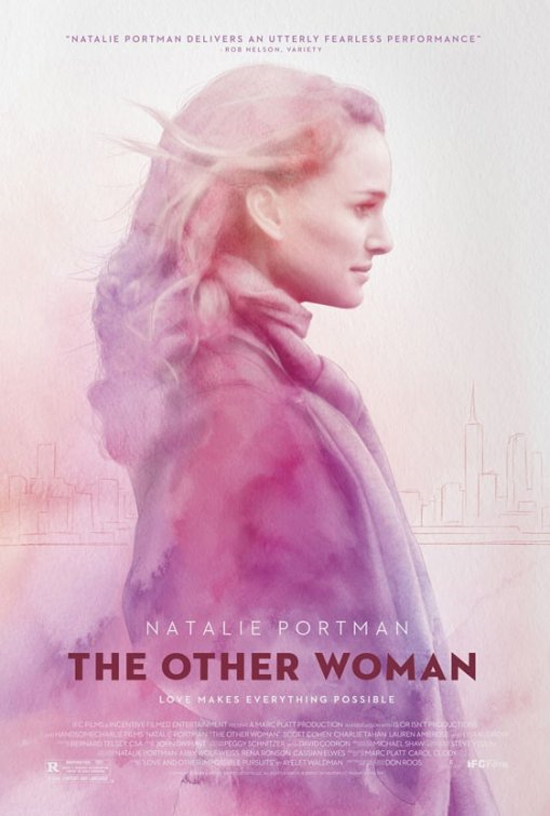
THE OTHER WOMAN 
Natalie Portman: Emilia / Scott Cohen: Jack / Lisa Kudrow: Carolyn / Charlie Tahan: William
Written and directed by Don Roos / based on the novel "Love And Other Pursuits" by Ayelet Waldman
 There
is one thing that THE OTHER WOMAN does with exemplary precision.
There
is one thing that THE OTHER WOMAN does with exemplary precision.
It provides us with
characters that, within a few brief minutes, we grow to detest.
This is a problem, though, considering that the film is intended, I
think, to be an uplifting and heart-warming family drama.
Let’s just say that I was neither uplifted nor had my
heart warmed.
THE OTHER WOMAN contains characters I didn’t like involved in
petty family squabbles I didn’t care about and provides insights into
the nature of upper class divorce and step-parenthood that I never found
revelatory or compelling. What
we have is a parade of rich, over-privileged, and overbearing people making
stupid life choices. Imagine
being stuck in a room with a family that perpetually argues for 90-plus
minutes and you’ll have an idea of what sitting through THE OTHER WOMAN
is like.
The
film is based on a novel – unread by me – with a much better and
snappier title, LOVE AND OTHER PURISTS by Ayelet Waldman and has people
behind the camera of talent, to be sure. The director is Don Roos, well known and established for
writing strong female roles (THE OPPOSITE OF SEX) and the last film of his
I saw, HAPPY ENDINGS, was an
ambitious oddball mixture that I merrily described in my review as
“Quentin Tarantino meets DAYS OF OUR LIVES.” THE OTHER WOMAN also has the always-ravishing Natalie Portman
as its lead actress.
However,
here’s my issue with the film: THE OTHER WOMAN is just not as
dramatically fearless and ambitious as Roos’ previous efforts, nor is
his acuity for snappy, blunt, and matter-of-fact dialogue that
cuts to the heart of scenes anywhere apparent here. Roos’s screenplay adaptation for THE OTHER WOMAN feels
shapeless, dull, and mechanically soap-opera-esque instead of being
searing. Secondly,
there’s Portman herself, and I will not hide from the fact that, yes, I
have crushed on her as an actress for years, but she gives a performance
that’s too jagged and uncoordinated to become involved in, not to
mention that the role she plays is, for the most part, dislikeable.
Consider this: she plays a home wrecker and an adulterer that
spends most of the film sulking, pouting, crying, and complaining - not
the stuff of audience empathy.
Okay,
Portman’s Emilia does have one thing to be distressed about: she lost
her newborn baby to mysterious (at least at the beginning of the film)
circumstances that has left her deeply depressed.
After a brief montage of images showing the baby’s birth (the
only bit of visual and stylistic interest in the film) we are whisked to
the present we see her having more issues than just dealing with the grief
of her dead child. Firstly,
she stole her current husband, a lawyer named Jack (a decent Scott Cohen)
away from his bitch-in-heels, high powered, and independent minded wife,
Carolyn (Lisa Kudrow, in a strong and acid-tongued performance playing,
granted, a weakly cobbled together character).
Of course, Carolyn despises Emilia, but can you blame her?
Emilia, after all, once worked at the same office as Jack and now
she’s married to him.
It’s
more complicated than that: we learn that the baby that died was actually
the product of a pre-marriage fling between Jack and Emilia.
Clearly, Emilia has deep issues coming to grips with losing the baby
and the thought of being a proud mother figure, which figures heavily in
her current relationship with her new stepson, William (Charlie Tahan) who
seems to take great pleasure in reminding Emilia about her baby’s short
time spent on Earth (“You know, according to Jewish law, your baby
was not technically a person,” he coldly tells her at one point).
Not only is the rift between Emilia and William growing more
stressful and problematic by the day, it has the negative side effect of
ruining her marriage to Jack. And
then there are Emilia’s own parental issues with her father, who she
once caught with a Russian-born stripper.
I mean,
wow…if that plot synopsis sounded like another lame and sensationalistic
daytime soap opera then you’re not alone.
I guess that want confounds THE OTHER WOMAN’s lackluster script
is that it can’t seem to understand whether it wants to play things for
drama or laughs, which leaves the whole film feeling very scattershot.
The script is also convenient for how it manufactures conflict and
easily and shamelessly comes up with solutions when it’s deemed
necessary. Consider
Kudrow’s divorced wife, for a second: Yes, she should be a spiteful and
hate-filled character and has valid reasons for despising Emilia.
Yet, near the film’s conclusion, the pair have a laughably
unrealistic meeting during which they discuss their relationship and, as
astounding as it sounds, gives Emilia a sense of closure about the real
nature of her baby’s death. If
only life were scripted so opportunely.
I think
that if the characters in the film were, say, lower or middle class than I
would have perhaps latched on to them more, but the people that populate
THE OTHER WOMAN are filthily affluent and well off, which makes all of
their cardinal interpersonal blunders and conflicts seem all the more
excruciating to relate to. Again,
this is not aided by the fact that Emilia is rarely an amiable or
relatable figure in the film, outside of the sympathy we feel for her
because of her lost child. The
problem, though, is that she is a second wife, a cheater, a home wrecker,
and a truly horrible stepmother to William.
Can you really fault William for hating her either?
I will concede, however, that Portman does an effective job of
evoking this woman’s self-absorption, but when called upon to impart
some humility and warmth into her, Portman seems lost.
William, on the other hand, is an almost equally insufferable character. It’s never really fully explained, for example, why he harbors so much pent-up hostility towards Emilia’s dead baby, and his frequent pestering digs at her and her wounded memories of the child seem inhumanly cold. There’s also another thing that annoyed me about William: he seems less like a tangibly believable bright-minded and emotionally vulnerable 8-year-old child conflicted by family strife and is more of one of those irritatingly smug, defiant, and unrealistically sharp tongued child characters that only an adult screenwriter could conjure. There are times when I just wanted to reach out and slap William for being a self-centered and uncaring brat. The fact that these two wholeheartedly unsavory characters have an obligatory scene where they make up and exchange “I love you’s” makes the film’s emotionality feel all the more forced.
There is probably only one real reason that this film had a limited theatrical run earlier this past January. IFC decided to market and distribute it in anticipation of Portman getting a Best Actress nomination for BLACK SWAN (which she did). It should be noted that THE OTHER WOMAN was shot waaaaaay back in 2009 until it sat on the shelf for just the right time to release, which oftentimes is industry talk meaning that the film is so uninspiring and bland that it was not ready for a large theatrical release. THE OTHER WOMAN does contain individual moments of levity and Roos at least accurately portrays Upper East Side Manhattenites, I suppose. Kudrow is also effective as a fiery cauldron of resentment in her performance. The real issue, alas, with THE OTHER WOMAN is that it’s just more instantly forgettable than terrible.
